Here are a few examples of my courses.
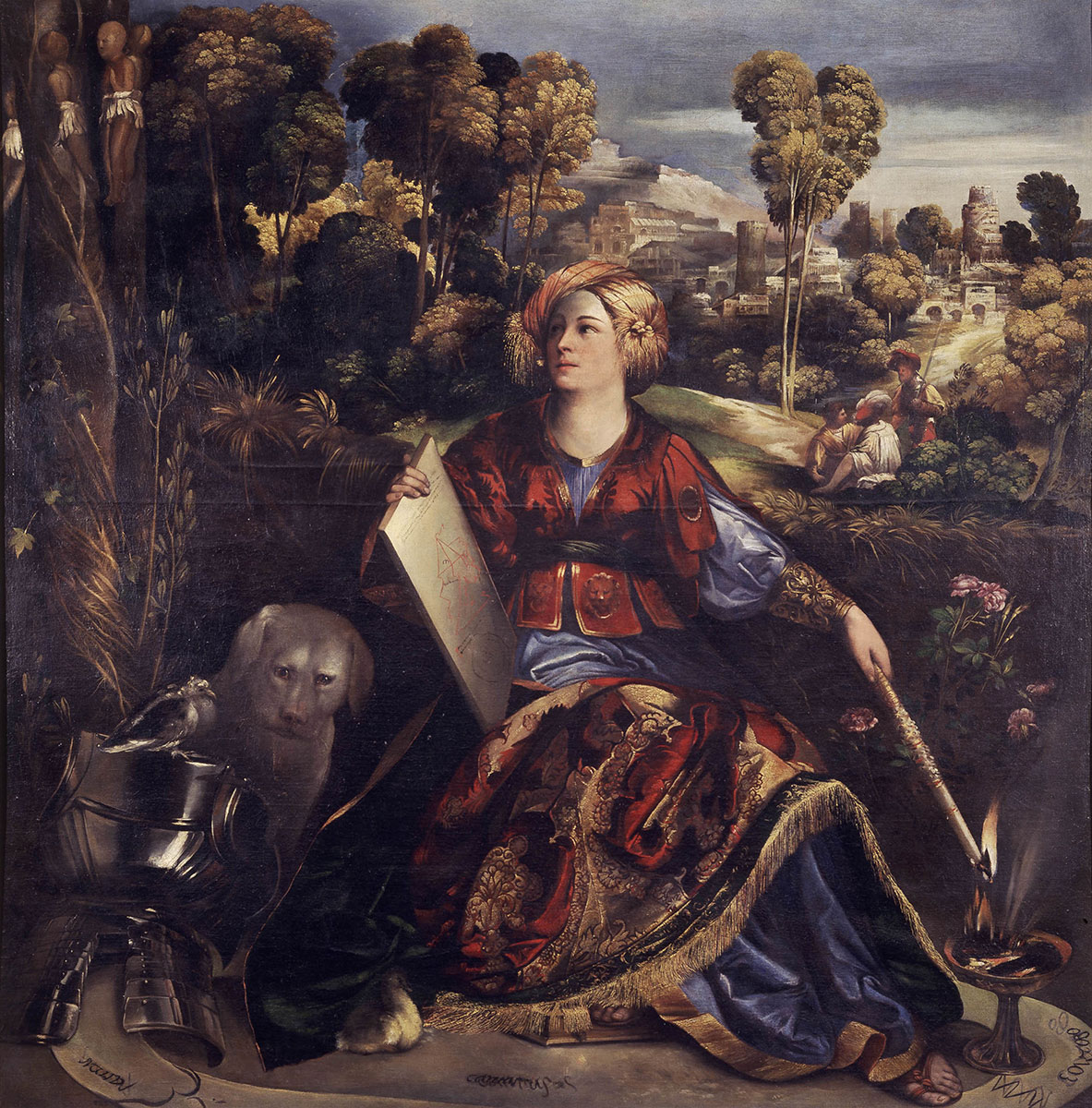
When claiming that authors personify
animals, what do readers assume about differences between humans and other creatures? This course evaluates poetry, drama, and prose in terms of debates about each genre's human-centeredness. With a prominent theorist, we will wonder whether poetry offers more substantive thinking concerning the animal
than Western philosophy (Derrida). With a contemporary scholar, we will consider how plays featuring animals might modify drama's reputation as the most anthropocentric of the arts
(Chaudhuri). Finally, with a literary historian, we will analyze how realistic novels supplant forms friendlier to animal characters
(Boehrer). Featured texts include poems by Atwood, Angelou, and Rilke; Shakespeare's The Two Gentlemen of Verona; Shaffer's Equus; and Høeg's The Woman and the Ape.
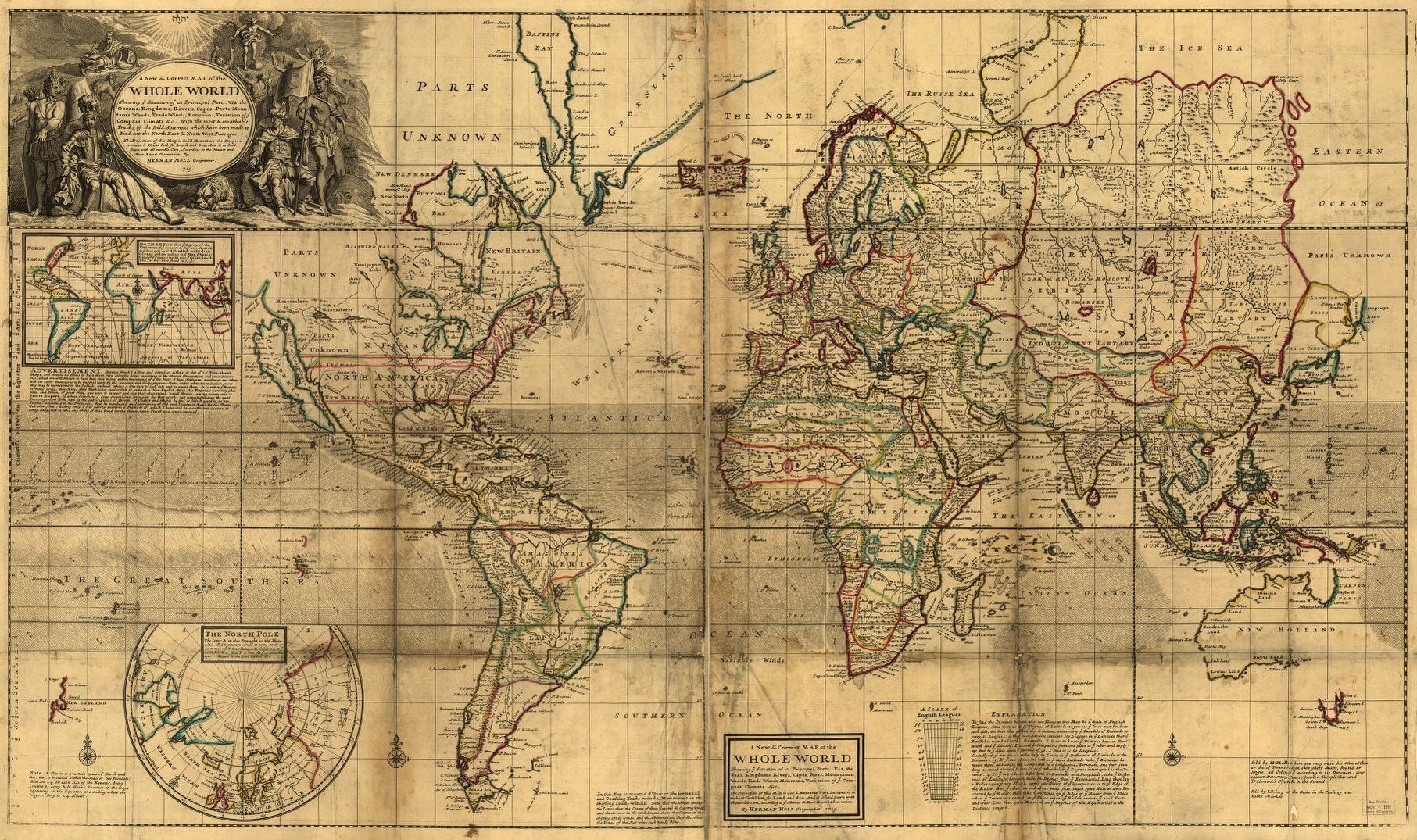
Herman Moll, A New & Correct Map of the Whole World (1719). Photo © Library of Congress, Geography and Map Division, Washington, D.C. https://www.loc.gov
As a political idea, Britain
has never coincided with the geographical entity bearing the same name. Instead, it has excluded many of the island's inhabitants while including some beyond its shores. This course studies how early literature constructs and questions notions of Britishness. Special attention is paid to Roman, Anglo-Saxon, and Norman conquests; conflicts among England, Wales, and Scotland; colonization of Ireland, India, and America; subordination of women, Jews, Africans, and indigenous peoples; and uncertainties about whether or which non-human creatures deserve political recognition. Readings commence with Beowulf (conscripted as the English national epic in the late eighteenth century) and conclude with Phillis Wheatley. Other featured authors include Marie de France, Chaucer, Spenser, Shakespeare, Katherine Philips, Aphra Behn, and Alexander Pope.
Writers of eighteenth-century English literature believed art should imitate nature. In practice, though, they followed ancient models and adapted or parodied works by contemporaries. This course considers such imitations, examining their relations to both sources and historical realities like the slave trade, subordination of women, and England's rise among European colonial powers. Test cases for Macherey's definition of literature as being characterized by this power of parody
(p. 68) include Behn's Oroonoko, Pope's Rape of the Lock, Swift's Gulliver's Travels, and Fielding's Shamela. The course ends with the English novel's attempt to create a more realistic imitation of everyday life. In addition to writing analytical essays, you will deepen your understanding of imitative literature by composing a creative piece mimicking another work.
A man feigns impotence to cuckold unsuspecting husbands; a male and female couple compete for sexual favors from a male servant; a reformed prostitute recounts experiences with male and female partners. How should we interpret these literary episodes, since Foucault and others have dated the concept of sexual orientation to the 19th century? Posing such questions, this course aims to improve understandings of both the eighteenth century and today. Featured authors include Wycherley, Rochester, Behn, Pope, Swift, Montagu, Cleland, and Wollstonecraft. Featured scholars include Foucault, Rubin, Sedgwick, Butler, and Nussbaum.